宋代名作:青瓷
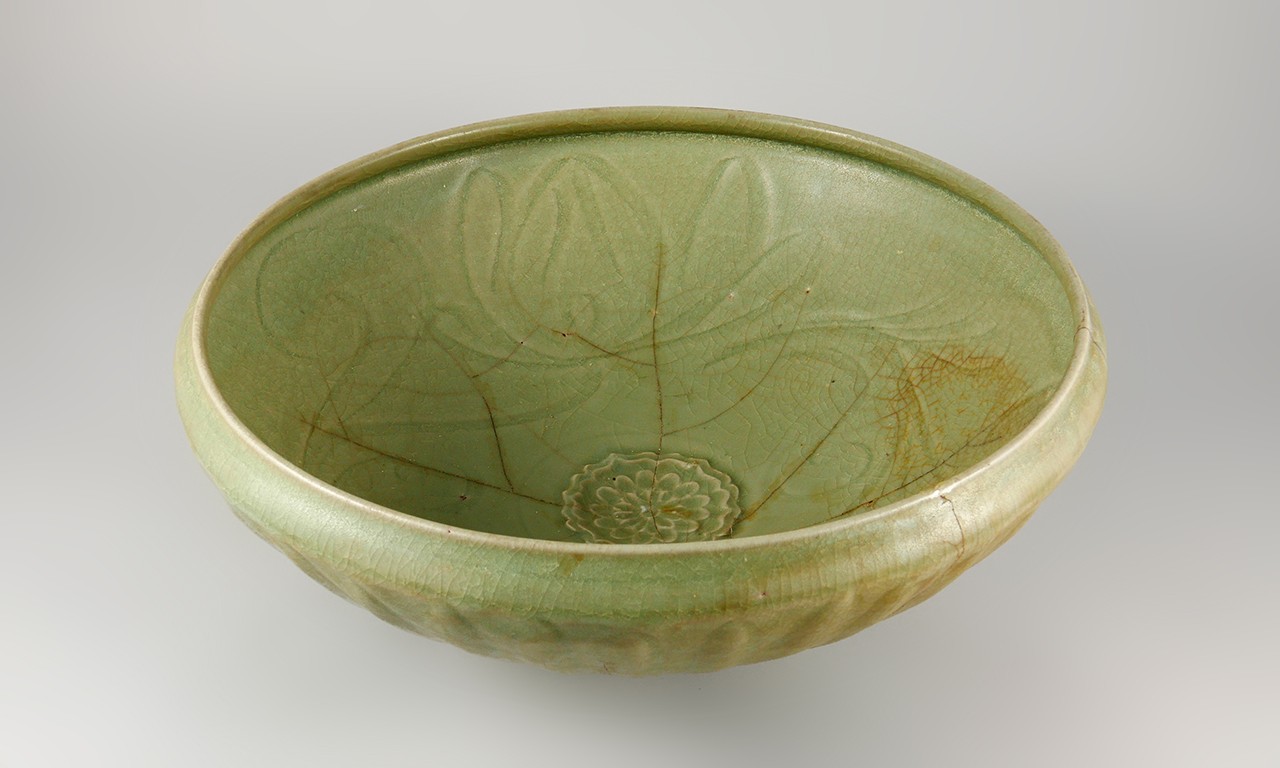 |
| Chrysanthemum Petal Bowl, Song dynasty (960-1279) Longquan, Zhejiang Province, China Glazed ceramic; 4 1/2 x 10 13/16 x 33 in. 91.48.2 Gift of Carroll and Susanne Barrymore |
宋代名作:青瓷
現代世界從中國宋代(公元960—1279年)繼承了一項卓越的工藝傳統:青瓷。所謂青瓷,是指施以青綠色釉的陶瓷器物,寶爾博物館館藏的一件菊瓣紋碗,正可作為其典型代表。此件器物現為館藏珍品,並於「中國古代藝術:五千年傳承」展覽中展出。
「Celadon」一詞的名稱頗具趣味,其來源並不在中國,而是在歐洲。17世紀法國一部流行戲劇中的人物 Celadon,常身著灰綠色服飾。歐洲人遂以此稱呼自中國輸入的灰綠色釉瓷,「celadon」一詞也因而沿用至今。
青瓷的歷史可追溯至公元3世紀,但其發展在宋代達到巔峰。其中,以龍泉窯出產的青瓷最為著名。宋代工匠以木灰為原料調製釉料,使其達到高度成熟,形成了龍泉青瓷獨特的工藝特徵。
這種釉料能燒成溫潤而富有光澤的青綠色調,使龍泉青瓷——包括上文所提及的菊瓣紋碗——呈現出廣為人知的典雅之美。
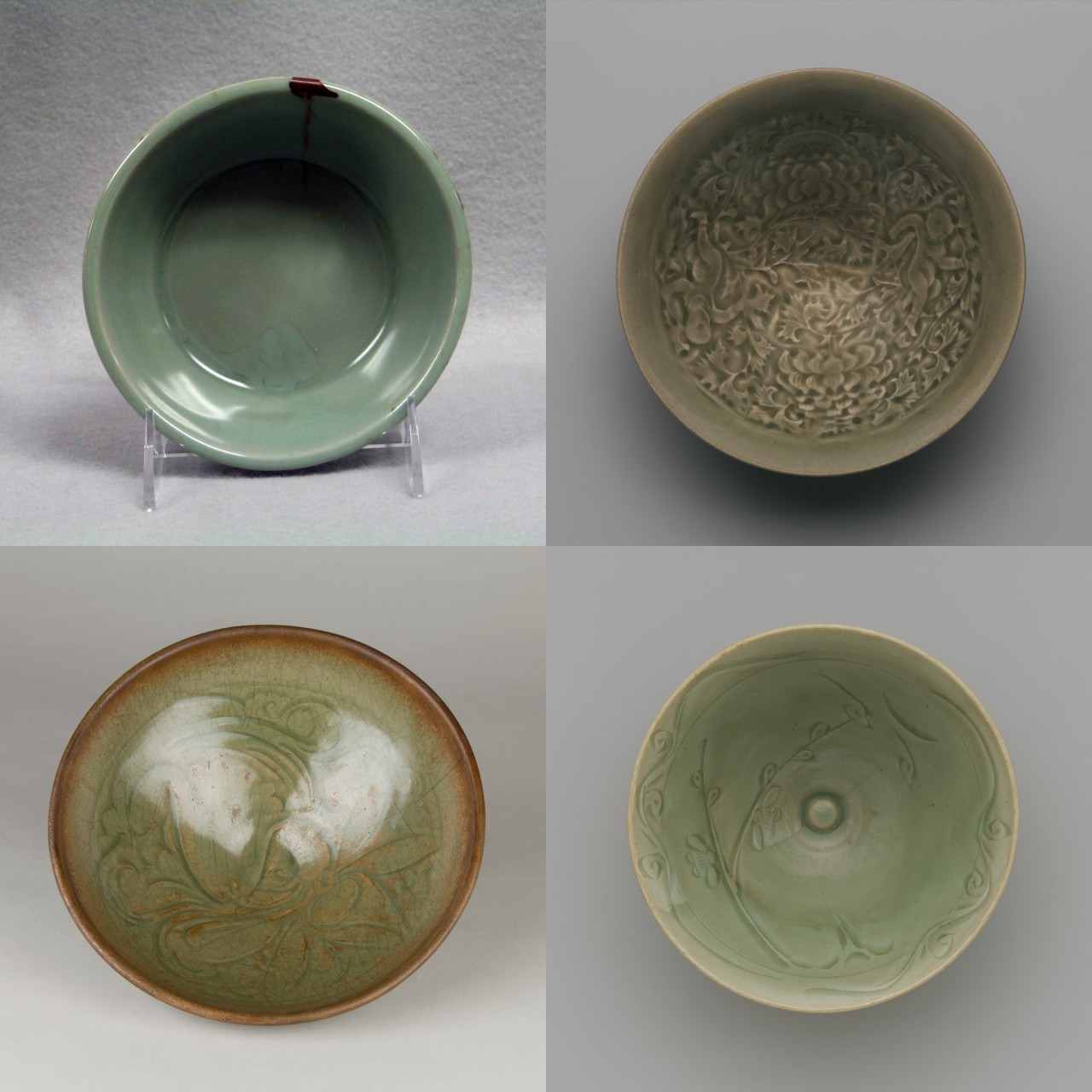 |
| Bowls from the 11th-14th century, stoneware or porcelain under celadon glaze, Metropolitan Museum of Art Public Domain |
Seize the Clay
Chinese ceramists achieved the technology of glazing in China’s first dynasty, the Shang (1600-1046 BCE), and their green-glazed ceramics are among the oldest in the world. The specific color of Longquan celadon ware – like the Bowers’ bowl – is the defining attribute for the color celadon. But, even though it is traditionally a pastel green hue, celadon ware can range from a pale, almost translucent green to a deep blue-green shade.
Celadon ceramics typically have an engraved ornamental design. Often, older wares have landscapes or figures inscribed. Yet, as time passed, the designs became a combination of naturalistic and idealistic motifs. The Bowers’ bowl, for example, has a stylized petal in its center with abstract leafy swirls circling. Nonetheless, celadon ware throughout Chinese history remains committed to a smooth and rounded silhouette. The ceramics are smooth and glossy, a testament to their aesthetic elegance.
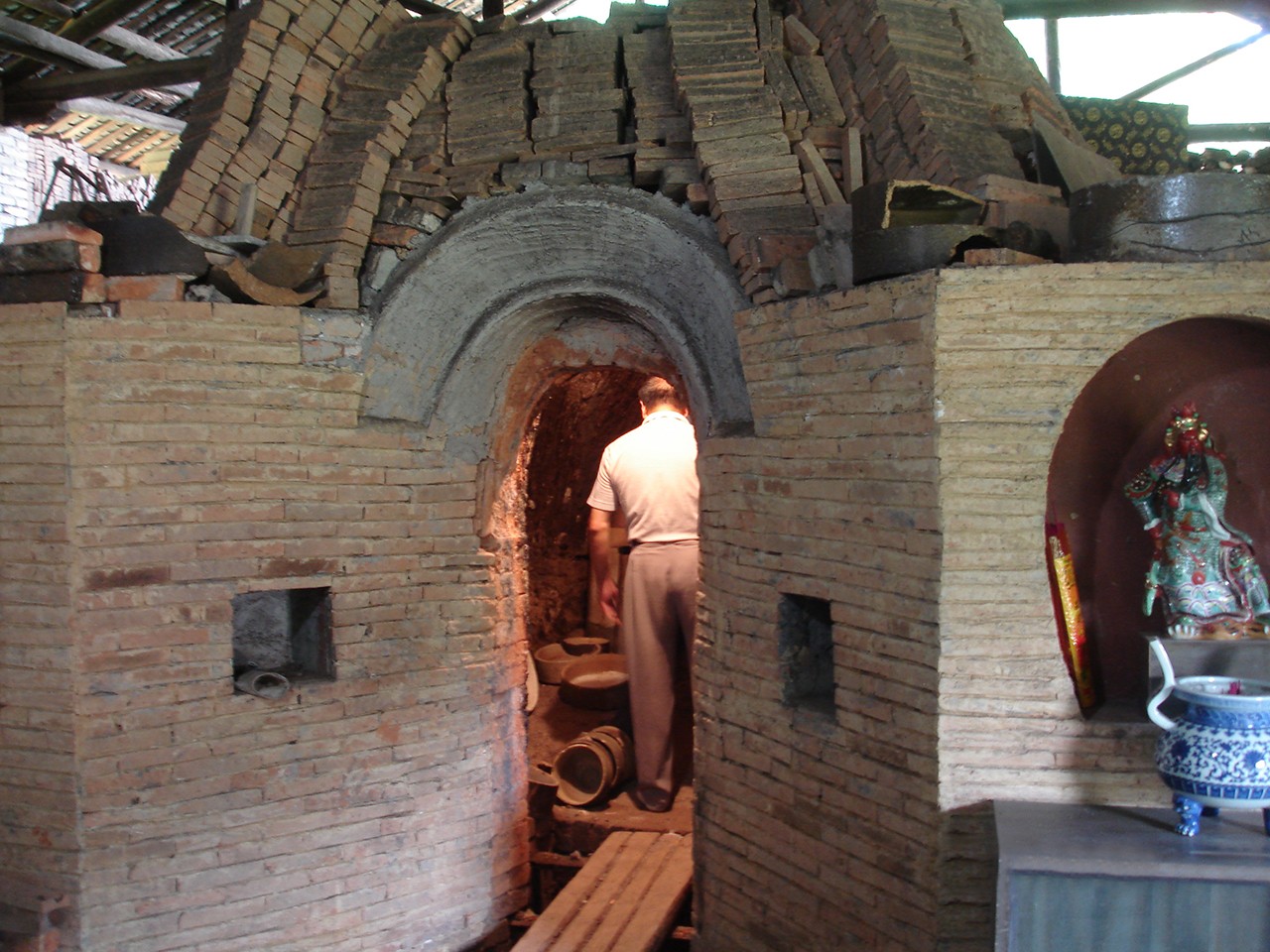 |
| A Chinese kiln in Jingdezhen, a few hours west of Longquan, 2007. Photographed by Pauloleong2002 Licensed under CC BY-SA 4.0. |
Kiln It
Longquan celadon ware was traditionally fired in one of the region’s Five Great Kilns. These kilns – Ru, Guan, Ge, Ding, and Jun – each fired the ceramics with a distinctive glaze. All the kilns were between 30 and 50 meters long and allowed thousands of objects to be fired at once – up to 25,000 objects could fit in one kiln. Some Chinese writers observed that the kilns looked like dragons spitting fire. Remarkably, though, this did not result in a decrease in the quality of the ware.
The celadon glaze like the glaze on the Bowers’ bowl is formed from kaolin clay, and the color is darkened by a small addition of cobalt. Additionally, iron oxide helps give the glaze its distinctive color.
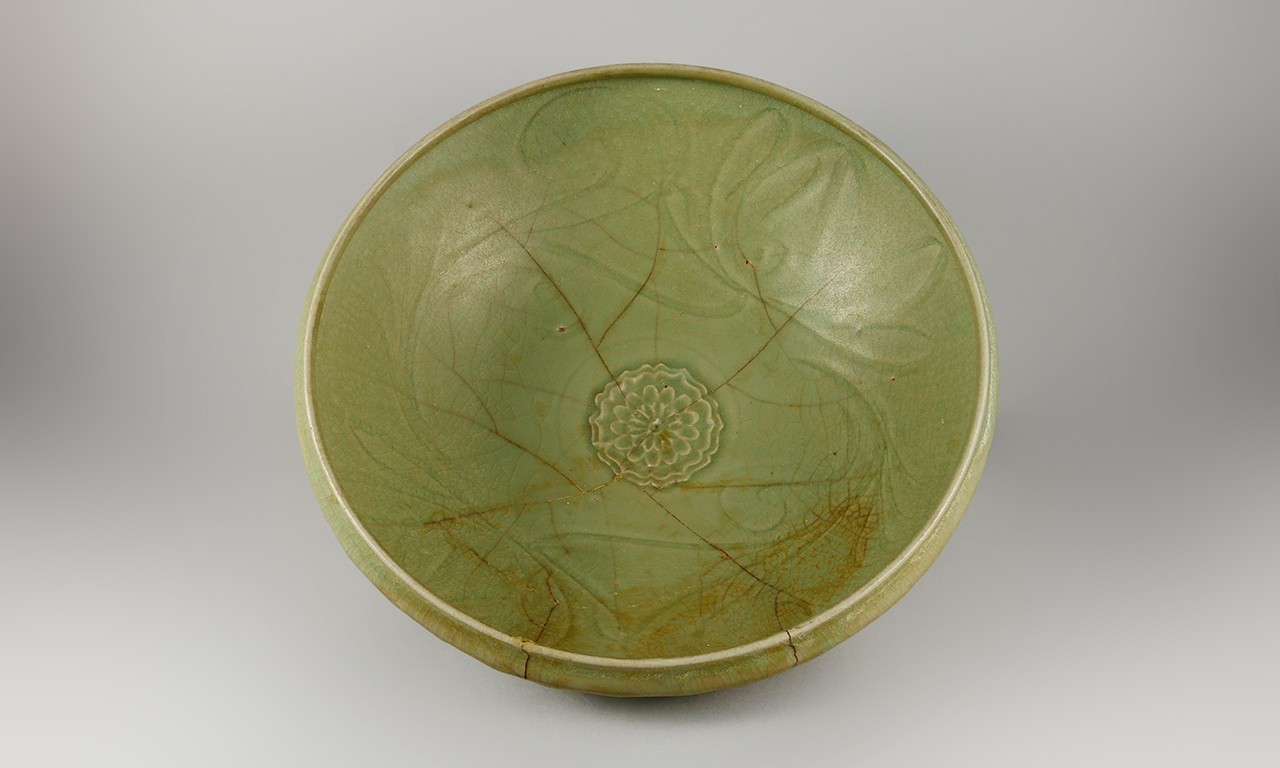 |
| 91.48.2 Gift of Carroll and Susanne Barrymore |
Song Supremacy
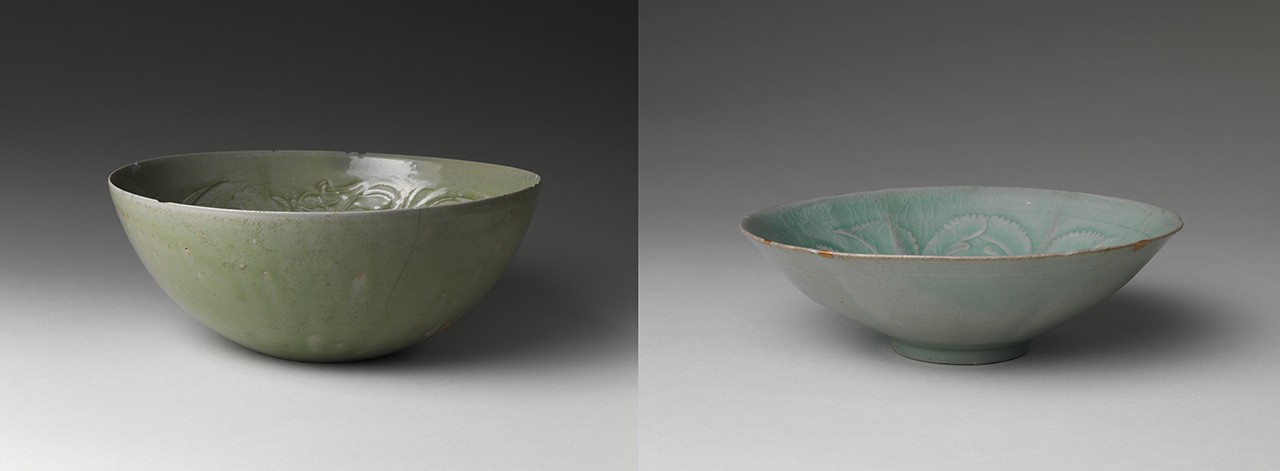
The Song era is considered the best for celadon ceramics, evident through the skilled craftsmanship of ware such as the Bowers’ bowl. After the Song dynasty fell, the Yuan dynasty took power, and art historians view the Yuan dynasty as a decline from Song. Yuan celadon does not have as clear of a green glaze as Song celadon has; the Yuan color is cloudier because the glaze was more finely ground during this period. After the Yuan dynasty came the Ming dynasty, which adopted its own style regarding celadon. Ming celadon is of a lighter and less grassy-green color than Song celadon is. Further, Song celadon has more detailed decorations than Ming, and the Bowers’ bowl’s floral ornamentation reflects the Song dedication to ceramic design. The Song, Yuan, and Ming dynasties’ ceramics, though, all illustrate a strong interest in a sleek silhouette in their designs, even though Song celadon is most well known.
 |
|
| Bowl with Dragons among Waves, 10th century China, stoneware under celadon glaze, Metropolitan Museum of Art Public Domain |
Bowl with Two Boys and Lotuses, early 12th century Korea, stoneware under celadon glaze, The Metropolitan Museum of Art Public Domain |
Celadon’s Influence
Celadon ware was a trade staple in the Middle Ages. However, certain celadon trade goods were unable to travel, as highly delicate ware may not have survived a rough journey to Europe. Nonetheless, many Longquan celadons were discovered on trade routes in the Middle East and Southeast Asia. In fact, there was such a large quantity of celadon found in Martaban – once a bustling port city in present-day Myanmar – that historians once believed the ware was manufactured in the city. That was disproved after the Longquan kilns were excavated.
However, celadon was not just a trade good – it was also of great importance to and influence on neighboring regions. India and Persia, for example, valued celadon immensely because it was believed there that celadon had the power to reveal if poison was present. Korea and Japan were thoroughly influenced by Chinese celadon and began to create it themselves, and the Chinese influence on Korean pottery is evident above.
Song celadon – especially the Bowers’ bowl – is beautiful, but the craft of creating the ware as well as its influence on trade and regional pottery is just as significant.
This post was researched and written by Grace Funk, an intern for the Bowers Museum. Text and images may be under copyright. Please contact Collection Department for permission to use. References are available on request. Information subject to change upon further research.
Comments